When a £500 Opener Turns Into a £2,000 Mistake: Automating an Ageing Garage Door
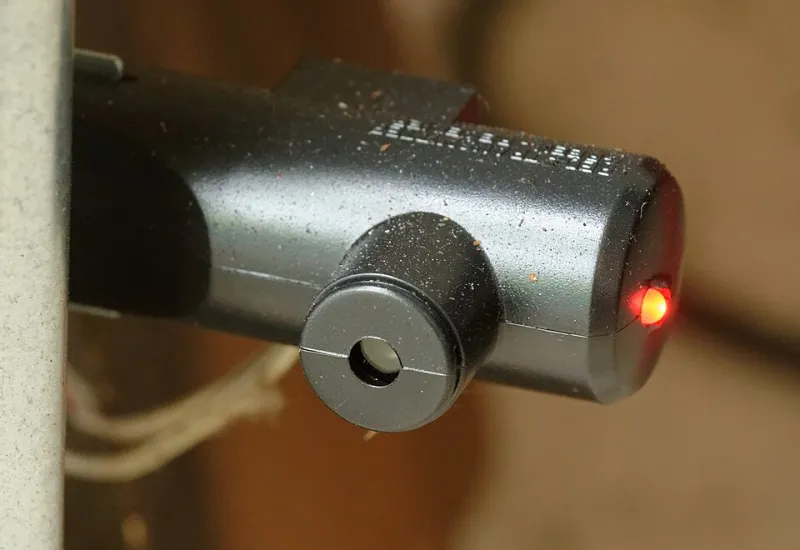
Photo: Jud McCranie, CC BY-SA 4.0, via Wikimedia Commons
There is a hopeful moment every autumn when somebody stands in front of a garage door that has been getting heavier since roughly 2019, looks up a motor kit online, and thinks: that will do. Sometimes it will. But a fair number of automation jobs that get ripped out within two or three years were bolted onto doors that were already on their way out — and the owner paid twice for the privilege.
This is not a scare story about motors. A well-chosen operator on a sound door is one of the better value upgrades a British home can have: dry, secure, and a great deal kinder on a bad back in February. The question is whether your particular door is a good host for one. Here is how to work that out before anybody starts drilling.
The motor doesn't lift the door — the springs do
Worth getting straight early, because it explains most of the failures. An electric operator gives a modest push. The actual lifting is done by the springs, which are wound to carry the door's weight. When those springs are tired, the motor ends up doing the lifting instead — and it was never built for that. You get a strained operator, a shuddering door, and a warranty claim refused because the door was out of balance before the fitter arrived.
The three-minute test: put the door in manual, lift it to roughly waist height and let go. A healthy door stays where you left it. If it sags, drops, or needs a knee to get going, the springs, cables or rollers need sorting first — and that changes the maths considerably.
Compatibility is more than a door width
Every door type takes a different operator, and the differences are not cosmetic.
Up-and-over, canopy gear. The door swings out as it rises and there is no track. These take an arm operator with a bow arm, and the kit has to match the canopy mechanism rather than fight it. Cheap universal kits often claim compatibility and then rattle for a decade.
Up-and-over, retractable gear. Tracked, with different geometry again. Measure before you order anything.
Sectional. Needs clear headroom behind the opening for the tracks and torsion bar, plus enough ceiling height for the operator to hang. A shallow garage can rule sectional automation out entirely.
Roller. The motor lives inside the barrel, so the barrel's condition matters as much as the door's. Side clearance and headroom for the box are fixed numbers in the manufacturer's datasheet, not rules of thumb.
Then the boring things a surveyor should check: frame soundness, hinge and roller wear, whether the bottom rail will still hold a lock, and how much the door flexes. Timber doors are heavier and less forgiving. A steel door with a rotten frame at the base is not a motorisation candidate, it is a replacement waiting to happen.
Safety kit is not an upsell
UK installations should meet the harmonised standards covering powered doors — BS EN 12453 for safety in use, with test methods in BS EN 12445. In plain English that means force limitation, an obstacle-detection method appropriate to the door, and a proper manual release so you can still get the car out during a power cut.
In practice, a decent fit on an up-and-over will include a safety edge or a pair of photocells, and a sectional or roller will usually have a light beam across the opening. Ask the fitter for the UKCA marking, the Declaration of Conformity, and a demonstration that the door reverses when it meets an obstacle. If a quote offers hold-to-run as the only safety measure — you keep your finger on the button — that is a legal route for some doors but a poor experience and a poor safeguard with children or pets about.
The money, honestly
Rough 2026 figures, supply and fit, for a straightforward single door:
- DIY arm kit for an up-and-over: £150–£400, and you own the safety case.
- Pro-fitted operator on an existing up-and-over: £450–£850.
- Sectional or roller operator, fitted: £600–£1,200.
- A fused spur from an existing circuit: £120–£250, with a Minor Works certificate.
- No power in the garage at all, new circuit or armoured cable run: £250–£600.
- Smart module or app control: £50–£150.
For context, a new up-and-over fitted typically runs £700–£1,500, and an insulated sectional £1,200–£2,500 depending on size and glazing.
So a motor at £700, fitted to a door with four years left in it, is only sensible if those four years are cheap. Often they are not.
Warranties, electrics and the insurance question
Read the door manufacturer's small print before you buy the operator. Some warranties explicitly require an approved operator, or an approved installer, to stay valid. Motor guarantees run from two to five years, occasionally seven when registered with the manufacturer. Workmanship cover is usually one to two years, and it is worth asking whether it is insurance-backed — a two-year guarantee from a company that folds in eighteen months is worth precisely nothing.
On insurance: most buildings policies do not care whether your door is manual or powered, but two things do come up. Motor burn-out after a power surge is often excluded, and a surge protector is cheaper than an argument. And if your garage is integral or sits under a bedroom, the door may need to satisfy fire door requirements. Automation does not change that obligation, so do not let a fitter remove a fire-rated door to fit a lighter one.
Electrical work in England and Wales falls under Part P. A fused spur off an existing circuit needs a Minor Works certificate; a brand new circuit is notifiable. Either way, the paperwork should land in your hand.
The false-economy checklist
Motorising is usually the wrong spend if:
- the frame is soft, cracked or rusted through at the base;
- the springs are tired, or the door has already had a cable snap;
- the door is a single-skin steel panel with twenty winters on it;
- parts for that model are no longer stocked by anyone;
- you were already thinking about insulation, security or appearance — a new door does all three and takes a motor anyway.
It is usually the right spend if the door is under about fifteen years old, balanced, from a brand with spares on the shelf, and the main driver is accessibility, security, or simply not wanting to get out of the car in the rain.
One afternoon, two quotes
Get a price to automate and a price to replace, ideally from the same firm on the same visit. Ask both fitters the same three questions: what happens if the door fails its balance test on the day, what is excluded, and who honours the guarantee in year four. Then compare ten-year totals rather than day-one totals.
A motor attached to a sound door is a bargain. A motor holding together a tired one is a deposit on a replacement you will buy anyway.