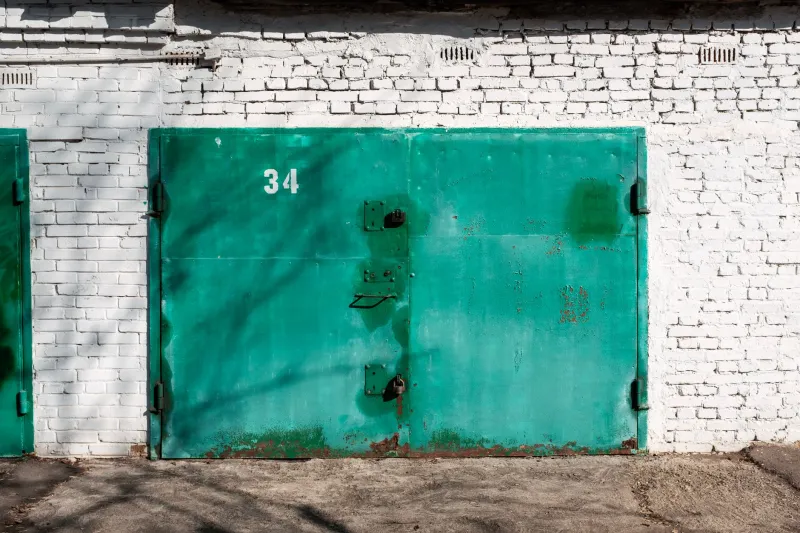
Before the First Frost: A Practical November Tune-Up for Your Garage Door
Photo: National Nuclear Security Administration / Nevada Site Office, Public domain, via Wikimedia Commons
Every year it happens the same way. The first proper frost lands, you go out to the garage at 7am, and the door either groans, sticks halfway, or lets in a puddle you did not invite. None of it is bad luck. Cold weather simply exposes whatever was already on the way out, and November is the last comfortable window you get to deal with it before your fingers stop cooperating.
So here is the checklist we would run through ourselves. No specialist tools, nothing that takes more than an hour or two, and a clear line drawn around the jobs you should not attempt.
Start with the rubber, because it always goes first
Bottom seals, side seals and the brush strips at the top are the cheapest parts on the whole door and the ones most likely to let you down. Rubber hardens below about 5°C, loses its spring, then cracks along the fold. Once that happens it stops sealing and starts funneling rain straight into the gap.
Run your thumb along the length of the bottom seal. It should feel supple and squash a little. If it feels like hard plastic, it is done. Do the same on the sides. A torch test works well too — close the door in the dark with a light inside the garage and see where light escapes.
While you are there, give the seals a wipe down and a light coat of silicone spray or a purpose-made rubber conditioner. That keeps them flexible through the frost and stops them freezing to the frame. Skip the WD-40, though. It is a solvent, not a rubber treatment, and it will dry them out further.
Moving parts: hinges, rollers and the things you should not touch
Every hinge, roller and pivot point wants lubricating before winter. Use a proper garage door lubricant — white lithium or a silicone-based product — not engine oil and definitely not cooking spray from the kitchen. A thin film is enough. Excess grease just collects grit and turns into grinding paste.
Check the rollers for flat spots and the hinges for rust or a loose fixing. If a hinge wiggles in the door panel, the door is working harder than it should.
Now the important bit. Springs, cables and the torsion assembly are not DIY territory. They are under serious tension, they can release violently, and there are documented injuries every year from people having a go. If you spot a frayed cable, a spring with a visible gap, or a door that slams down rather than lowering steadily, stop and call someone who knows what they are doing.
Condensation and damp: the problem inside the garage
This one catches people out because it has nothing to do with the weather hitting the outside of the door. Cold steel plus a warm, humid garage equals condensation, and condensation on the inside of a steel door means rust creeping out from the panel seams.
A few practical fixes. Lift boxes and paint tins off the floor so air can move. Do not stack anything against the inside face of the door — it traps moisture and hides problems. If the garage has vents, make sure they are not blocked with old carrier bags and cobwebs. If you use the garage as a workshop or utility space, a small dehumidifier in November and December is money well spent.
Also check how your door is finished on the inside. Bare or uncoated steel will sweat. A factory-coated panel copes far better.
Locks, handles and the manual release
Locks stiffen in the cold, and the day yours seizes will be the day you are already running late. Work a little graphite powder into the keyway rather than oil — oil attracts dirt and gum, graphite does not.
Test the handle and the internal release mechanism now, while it is a five-minute job. On an automated door, find the manual override and actually use it once. People discover it is seized at exactly the wrong moment, usually during a power cut in a January storm.
Wind-driven rain coming in sideways
British rain rarely falls straight down. If your garage faces west or sits on an exposed corner, driving rain will find every gap at the bottom corners and along the threshold. Look at the ground outside the door after a wet night: if water pools against the base, it will get in eventually.
Check the drainage channel and the ground fall away from the door. Clear leaves and silt from any gully. A threshold seal or a small ramped threshold can make a real difference where the slab sits slightly below the driveway. Also look at the head seal at the top of the frame — that is where wind-driven rain often gets in unnoticed, running down the inside of the door.
If your door is automated
Run the safety reversal test. Put a piece of timber or a full paint tin in the door's path and close it. The door should stop and reverse on contact. If it does not, get it adjusted before winter — this is a safety function, not a convenience one.
Change the fob batteries now rather than in the dark in February, and check whether your opener has a battery backup. On a cold night with a power cut, that feature stops being a gimmick. And resist the urge to pressure-wash anywhere near the motor housing or the control box.
When to stop and pick up the phone
Call a professional if you find any of the following:
- A snapped, stretched or visibly gapped spring
- Frayed or kinked cables
- A door that is noticeably out of balance, or that will not stay at half-height when you let go
- Bent track or a door that has jumped its runners
- Rot in a timber door that goes deeper than the surface skin
- Water coming through the wall or the floor rather than around the door
- Any door that has been hit by a car, even lightly
A pre-winter service typically costs far less than an emergency callout in December, and a good deal less than a new door. Ask specifically whether the price includes spring and cable inspection.
A sensible Saturday morning order of work
- Wash the door down and let it dry fully.
- Inspect and treat every seal.
- Lubricate hinges, rollers and pivots.
- Test the lock, handle and manual release.
- Clear the threshold and check drainage.
- Run the safety reversal test if automated.
- Note anything that needs a professional and book it now, not later.
An hour of this in November tends to be the difference between a door that shrugs off the frost and one that makes you late for work three mornings in a row.