Fixing a Tired Garage Door: When It's a £90 Job and When It's Time to Stop
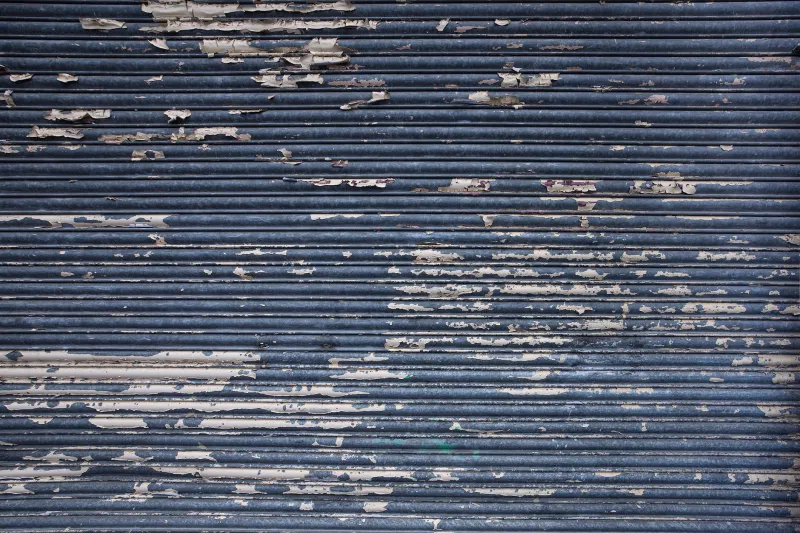
There's a moment every garage door owner recognises. The door stops gliding and starts complaining. One side lifts before the other. The bottom rail looks like it's been left out in the rain for a decade, because it has. So you call someone out, and within four minutes you're being told the whole thing needs replacing and it'll be two and a half grand, sign here.
Sometimes that's the right call. Often it isn't. The difference between a ninety-quid repair and a two-thousand-pound replacement is rarely about how the door looks and almost always about which specific parts have failed. So before you agree to anything, work through these ten questions. They're the ones a straight fitter would ask anyway.
The ten-question test
1. Is it a spring or cable failure, and has it taken anything else with it?
A snapped torsion spring is the single most common garage door failure in the UK, and it's a cheap one. Expect somewhere in the region of £120 to £250 fitted for a pair, and £70 to £150 for a cable. A twelve-year-old door with a broken spring is not a dead door — it's a Tuesday morning.
The catch is collateral damage. When a spring lets go, the door drops with a bang, and that can twist a panel or knock a track out of alignment. So the honest question isn't 'has the spring gone?' It's 'has the spring gone, and is everything else still square?' If it is, repair. If the panels have racked, keep reading.
2. What's actually rotten — a bottom rail, or the whole frame?
On timber doors, the bottom rail sits in a puddle for a living. It rots first and it's cheap to put right: a spliced-in hardwood or Accoya rail, sealed and repainted, is typically £150 to £350. That buys you years.
What you're checking for is how far the rot has travelled. Probe the bottom corners with a screwdriver. If it's soft past the lock stiles and into the joints, you're not repairing a rail any more, you're rebuilding a door.
3. Is the rust structural or cosmetic?
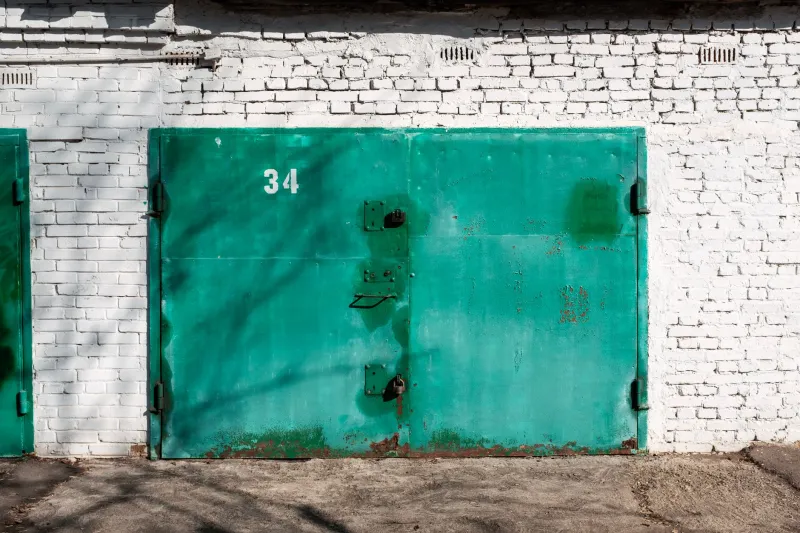
Steel doors rust from the bottom up, and the first bits look alarming and mean nothing. Flaking paint and surface rust around the bottom edge and the lock is a wire brush, a rust converter, a tin of paint and a dry Saturday — call it £25 in materials.
Perforation is a different story. If the screwdriver goes through the skin, water has been inside the door and there's no version of this that ends well. Same for rust creeping around the frame returns.
4. Can you still get the panels?
On a sectional door, swapping one dented panel is a modest job — often £150 to £400 depending on the make. But if the model's been discontinued, or the colour's been dropped, a single dented panel can mean a whole new door. That's not a fitter being lazy; it's a parts problem. Ask them to show you the parts listing.
5. Has the door sagged, or has the opening moved?
Sagging on an up-and-over is usually worn pivots and tired rollers rather than a bent door. A pivot and roller refresh at £60 to £120 sorts a surprising number of 'the door's had it' cases. Genuine panel distortion — where the door has lost its geometry permanently — is rare on anything under about fifteen years old.
6. Is the problem the door, or the opener?
Plenty of 'dead' automated doors are a receiver, a safety edge or a limit switch that's drifted out of adjustment. Isolate the opener and try the door by hand. If it moves freely, you've got a £50–£150 electrical fault, not a garage door.
7. What state are the rollers, hinges and lock in?
A rollers-and-hinges refresh is £50 to £100 in parts and transforms how a door feels. If a twenty-year-old door is stiff, noisy and awkward to lock, this is very often the whole story.
8. Are you fixing a fault, or buying a feature?
Be honest with yourself here. Insulation, extra security, quiet operation, automation — these are upgrades, not repairs. There's nothing wrong with wanting them, but don't let a salesperson convert a worn roller into a justification for something you'd have bought anyway. Keep the two conversations separate.
9. What's the arithmetic over two years?
Add up the quotes. A rough rule: if the repair spend you're looking at over the next couple of years starts approaching 25–30% of the cost of a new door, replacement starts to make financial sense. Below that, repair and revisit.
10. Does the door owe you anything?
Springs typically manage seven to twelve years. If your door is twenty-plus and springs, cables, rollers, lock and bottom seal are all failing within the same eighteen months, you're not fixing a door, you're funding a rolling restoration. That's the point to stop.
How to press a fitter who's pushing replacement
Ask what has specifically failed, and ask to see it — a good fitter will happily point at a frayed cable. Ask whether the part is available, from where, and how long it takes to arrive. Ask what happens after the repair: what's likely to go next, and when. If the answer to that is a shrug, you've learned something.
Get the alternative in writing. A decent firm will quote the repair as well as the replacement, itemised, and let you choose. Treat 'we don't repair that make' as a prompt for a second opinion — it frequently means 'we don't stock it' rather than 'it can't be done'.
When replacement genuinely is the answer
Structural rot through the frame and stiles. Panels cracked or split across the face. An obsolete mechanism with no parts supply. A repair quote north of 40% of new. And safety: an old door with no working safety reverse, on an opener that can't be made to work with one, is not worth saving.
Everything else, get a second quote before you commit. The most expensive garage door is often the one you bought when a £90 set of rollers would have done.