The Door You Forgot: Fire Separation in Homes With an Integral Garage
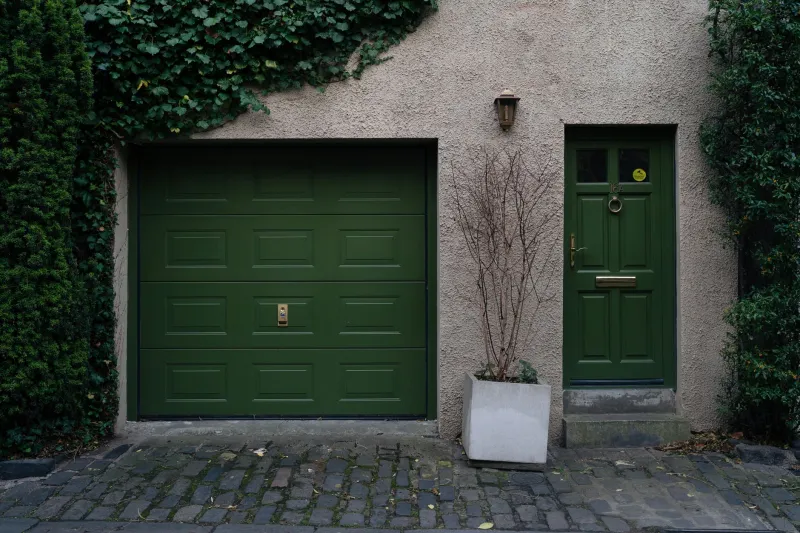
You can spend a satisfying Saturday afternoon admiring a brand-new sectional door: crisp lines, smooth operation, no more draught whistling through the gaps. It is a genuine upgrade. But if your garage is integral to the house, or attached and sharing a wall, the big door at the front is not the one that fire safety turns on. That door is the ordinary-looking internal door at the back of the garage, the one you probably walk past without thinking about.
This is the bit that catches people out. A garage door upgrade is a security, weather and kerb-appeal job. Fire separation is a completely separate system, and it is only as good as its weakest link. If the connecting door is a hollow-core bargain, if it has been planed down to clear a carpet, or if it has been propped open since the last house move, the shiny new door at the front is not buying you much protection.
Why the big door is not the fire door
The garage door has a hard enough job already: keeping out rain, wind, leaves and opportunists. In an integral garage, though, the fire risk is not usually about a fire starting outside and getting in. It is about a fire starting inside the garage, among paint tins, a lawnmower, a spare fridge or a charging battery, and then finding a route into the house.
That route is the connecting door, the wall and the ceiling above the garage. Those are the elements that need to hold their ground for a short but crucial window of time. The garage door itself is not normally the fire-separating element in that arrangement, and replacing it does not upgrade the separation.
What thirty minutes actually means in practice
The phrase you will hear is FD30: a fire door rated to resist fire for at least thirty minutes. In an integral garage, the door between the garage and the house should generally be a fire door with a self-closing device, fitted with intumescent strips and cold smoke seals. It should be a proper door set, not a standard internal door with a fire-rated label stuck on after the event.
Here is the awkward detail: fire doors are tested as complete assemblies. The door, frame, seals, hinges, closer and threshold all work together. Swap the hinges, plane the edges, paint over the intumescent strip or remove the self-closer and you can quietly undo the rating. A certificate for the door leaf alone is not the same as a compliant installation.
You will also see a step or raised threshold at the garage-to-house door. That is often there to contain fuel spillage as much as anything else, so do not assume it is a trip hazard to be removed. It is doing a job.
The survey and insurance blind spots
Home buyers' surveys often mention a missing or non-fire-rated door between the garage and the dwelling. Sometimes it is a passing note; sometimes it is a red flag. Either way, it is worth reading properly rather than skipping to the bit about the roof.
Insurance is the sharper end of this. If a fire spreads from the garage into the house through a non-compliant opening, an insurer may query whether the property was maintained in the condition they expected. That does not automatically mean a claim is refused, but it can lead to a reduced payout, a dispute or a difficult conversation at the worst possible moment. If you have an integral garage and you are unsure about the connecting door, tell your insurer what you have and ask whether they need anything done. It is a dull phone call that can save a lot of grief.
A new garage door is not a fire-safety fix, and it should not be described as one when you are arranging cover.
When Building Regulations come into play
Replacing the main garage door is usually not notifiable building work in England, though there are exceptions for listed buildings, conservation areas and certain other situations. Altering the connecting door, converting the garage into habitable space, building an extension over or beside the garage, or making a material alteration to the separating construction is a different matter. That is when building control gets involved and when you want a completion certificate at the end.
England's Approved Document B is the usual reference point, but Wales, Scotland and Northern Ireland have their own arrangements. The practical advice is the same: ask your local building control team before the work starts, not after. A quick call now is cheaper than discovering later that the door you fitted does not satisfy the surveyor, the buyer's solicitor or the insurer.
A ten-minute check you can do yourself
You do not need specialist kit to spot the obvious problems. Start with the connecting door:
- Shut it and look for daylight around the edges. Gaps mean smoke gets through long before flames do.
- Open it halfway and let go. A self-closer should take it shut and latch it, not leave it hovering.
- Check the intumescent strip and smoke seal. They should be intact, not painted over, not missing and not compressed to nothing.
- Look at the hinges and screws. A heavy fire door hanging on two weak hinges is a problem waiting to happen.
- Check the threshold or step. If it has been removed to make the garage floor flush, ask why.
Then look at the wider separation. Are there holes in the garage ceiling where pipes or cables pass through? Is the wall between garage and house intact, or has someone chased sockets back-to-back? Is there a boiler, consumer unit or battery charger mounted on the separating wall? None of these are automatically wrong, but they all deserve a proper look.
Questions to ask before you treat a garage upgrade as fire safety
If you are having work done, get clear answers in writing:
- Is the door between the garage and the house FD30, self-closing and fitted with intumescent and smoke seals?
- Can you show me the door set certificate and the installation instructions?
- Will you make good the frame, seals and threshold as part of the job?
- Does this work need building control sign-off, and who is arranging it?
- Does my insurer need to know about the current arrangement?
The bottom line
A new garage door is a good thing to spend money on if the old one is tired, draughty or insecure. Just do not let it stand in for fire separation. The door at the back of the garage, the wall beside it and the ceiling above it are the bits that buy you time. Check them, ask awkward questions and get the paperwork. It is a lot less dramatic than a new door with a fancy finish, but it is the part that actually matters when things go wrong.