Wet Concrete, Dry Verdict: Tracing Rain at Your Garage Door Threshold
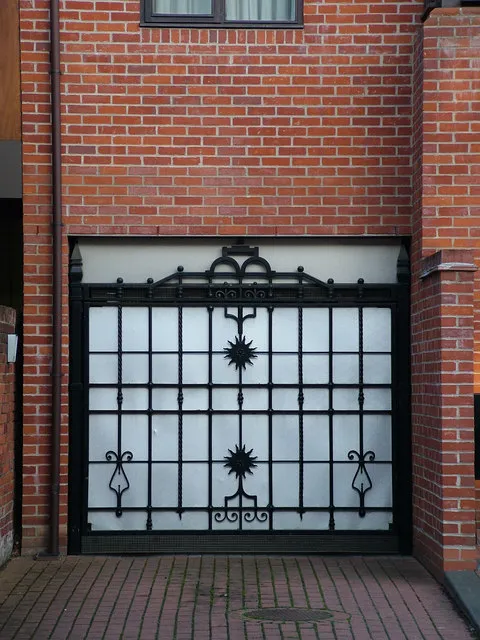
Photo: John Goldsmith, CC BY-SA 2.0, via Wikimedia Commons
A wet garage floor is one of those problems that looks simple from the doorway and gets more complicated the closer you look. You see water inside, you assume the door is letting it in, and you start browsing replacements. Sometimes that is exactly right. Often, though, the door is doing its job and the real culprit is the strip at the bottom, the paving outside, or the way the floor falls. Before you spend money on a new door, it is worth working out which part of the threshold system is failing.
Start with the puddle, not the product
Where the water settles tells you quite a lot. A thin, even damp line running the full width of the door usually points to the bottom seal: it has flattened, hardened, or stopped making contact. Water gathering at one end only suggests the door is sitting unevenly, the floor has a local dip, or the outside paving slopes towards that corner. If the wet patch appears just inside the door after heavy rain, but the rest of the floor stays dry, the threshold is the likely suspect. If water is standing outside against the door and then creeping in, drainage or outside levels are more likely.
It also helps to check the walls and corners. A damp patch near a side wall may have nothing to do with the door at all. It could be a leaking gutter, a blocked downpipe, or water tracking along the garage floor from elsewhere. Look up before you look down.
The ten-minute water test
Pick a dry day and use a hose on a gentle flow, not a pressure washer. Start at one end of the door and let water trickle along the outside threshold for a few minutes. Watch inside. Then repeat at the other end and, finally, across the middle. Keep the flow low enough that you are simulating rain running off the drive, not blasting water under pressure.
If water appears inside almost immediately, the seal or the door-to-floor contact is the issue. If water pools outside first and then finds its way in, you have a fall or drainage problem. If nothing happens during the test but the floor is wet after driving rain, note the wind direction. Wind-driven rain can push water into places a gentle hose test will never reach.
Chalk marks are useful here. Mark where water first appears inside, and take a photo. It gives you a clear record to show a installer or drainage contractor later, and it stops you relying on memory.
Seal problem or drainage problem?
The difference matters because the fixes are completely different. A seal problem is anything that stops the door making a reasonable contact with the floor: perished rubber, worn brush strips, a door that no longer closes squarely, or a threshold that has cracked and dropped. A drainage problem is water arriving at the door faster than it can get away: blocked channel drains, paving that slopes towards the garage, a downpipe discharging right beside the opening, or outside ground levels that sit higher than the garage floor.
A new threshold seal will not fix a blocked ACO drain. Equally, clearing a drain will not fix a door that has a 20mm gap under one corner. Be honest about which one you are dealing with.
Floor fall, dips and the limits of a seal
Garage floors should fall slightly towards the outside. It is not usually a steep slope, just enough to encourage water away from the building. You can get a rough idea with a spirit level, or by trickling a little water across the floor and seeing which way it runs. If the floor falls inward, or has a dip right at the door line, a seal has a harder job. It can close the gap when the door is shut, but it cannot correct a floor that directs water back inside.
This is where threshold drain channels come in. A narrow channel across the opening can catch water before it reaches the door and route it to a soakaway or drain. It is more work than a rubber strip, but it can be the sensible answer where the floor fall is wrong and rebuilding the floor is unrealistic.
Door type changes the conversation
Up-and-over doors, sectional doors, roller doors and side-hinged doors all meet the floor differently. A roller door often relies on a brush seal, which is good at stopping draughts and debris but less effective against standing water. A sectional door usually has a rubber bottom seal, but the tracks and panel joints still need to shed water properly. A side-hinged door can be very weathertight, but only if the threshold and frame are designed as a pair. An older up-and-over door may have generous gaps by design, and no amount of sealant will turn it into a flood barrier.
That does not mean every old door needs replacing. It does mean you should match the fix to the door you actually have, not the door in the brochure.
Cheap fixes that are worth trying first
If the diagnosis points to the seal, start simple. A replacement threshold seal or brush strip is often a modest DIY job, and adjusting the door’s closing position can close a gap that has opened up over time. Clear any channel drain, check that gullies are free, and make sure downpipes discharge well away from the opening. Those jobs cost little and can make a real difference.
What I would not do is bridge a big gap with a bead of sealant and hope. It rarely lasts, it can trap water, and it makes future repairs messier. Use sealant for small imperfections, not as a substitute for a proper threshold strip.
When a bigger job is the honest answer
If the door is warped, rusted through at the bottom, or so worn that it no longer closes consistently, a new door may be the better long-term spend. If water stands against the door after every heavy shower because the paving falls the wrong way, external drainage or landscaping work is the real fix. And if the garage floor is consistently wet across a wide area, not just at the door line, suspect drainage before you suspect the door.
A sensible order is: observe, test, clear what is blocked, replace the cheap seal, then monitor through a few wet weeks. If the problem persists, get quotes for the next level of work. A garage door is only one part of keeping water out. The threshold is where the argument is usually settled.