Listen First: What Your Garage Door's Noises Are Warning You About
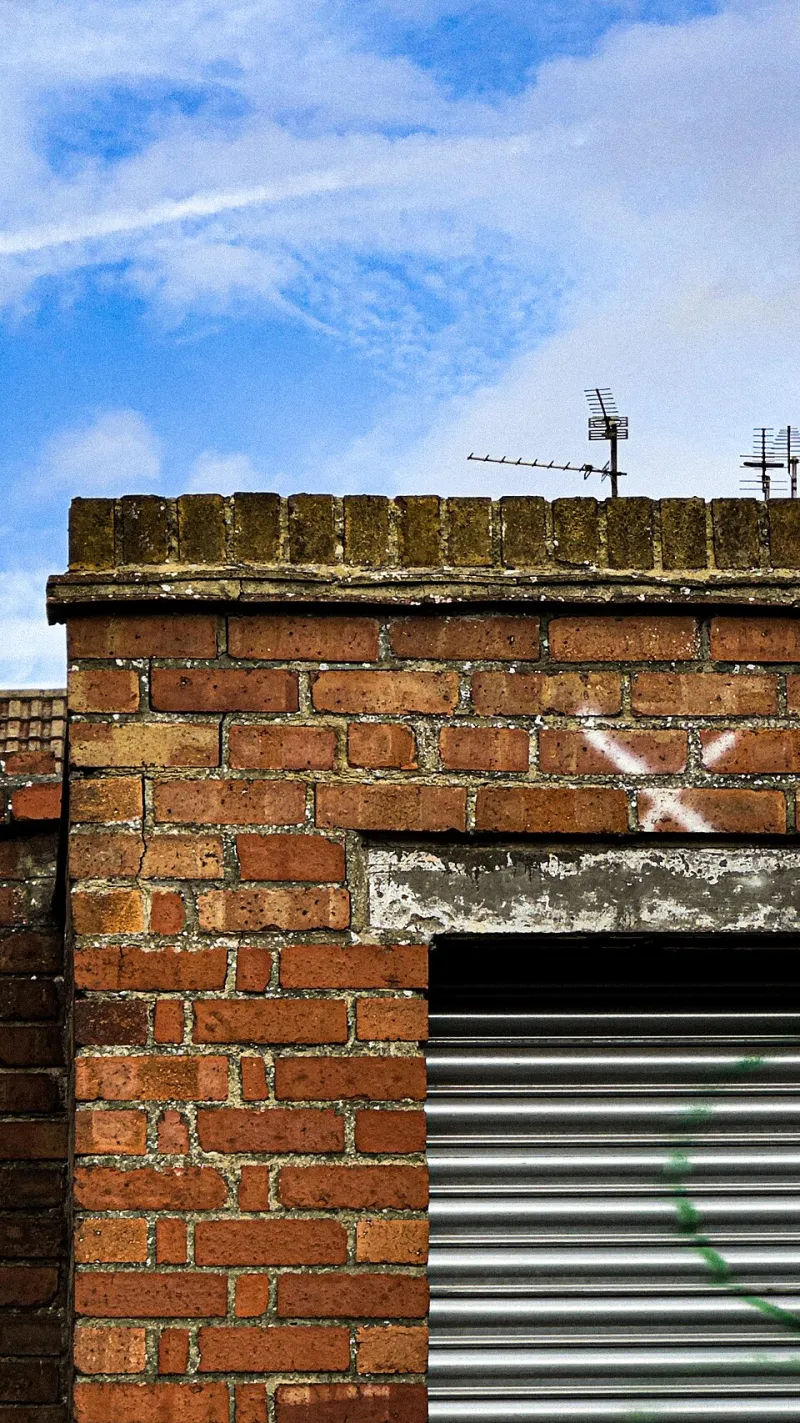
Photo: OathOn, CC BY-SA 4.0, via Wikimedia Commons
Most garage doors don't break. They complain for weeks first, then break. The trouble is that a noisy door is so easy to tune out — you hear it for eight seconds, twice a day, and your brain files it under "background." Then one Tuesday morning the thing stops halfway up and you're ringing round for a quote you'd rather not be paying for.
Treat sound as a free diagnostic. Below is the noise-to-cause map we'd run through ourselves, in plain English, with a rough line between the jobs that belong on your Saturday and the ones that should go to someone with a van, a torsion bar and insurance.
The two-minute safety rule before anything else
Before you go hunting for grease, have a look at the door. If it's hanging off one side, if a cable looks frayed or coiled slack, if the door won't stay up when you lift it halfway by hand, or if you can see daylight through a snapped spring above the door — stop. Don't run the opener, don't try to "see if it works now." A door with a broken spring or cable can drop without much warning, and running the motor against it can burn out an opener that was perfectly fine.
Everything below assumes the door is still sitting square in its tracks.
Squealing and whining: usually the cheap end of the problem
A high-pitched squeal that tracks the door's movement is nearly always friction, and friction is generally a lubrication question. The usual suspects are the rollers, the hinges, and dry pivot points on a canopy or up-and-over door.
What to do: a proper garage-door lubricant — silicone spray or white lithium grease — on the hinge pivots and roller stems. Not cooking oil, not old engine oil, and go easy with standard WD-40, which is a decent cleaner but a poor long-term lubricant. If the rollers are the cheap metal kind, look at the wheel itself: scored, flat-spotted or rattling in its housing means it's due for replacement, and nylon rollers are a tenner-ish a go and quiet.
If the squeal is coming from up near the spring bar rather than the tracks, don't spray it and hope. That's a pro's job.
Grinding: metal telling you it's unhappy
Grinding is harsher than squealing and usually points to something rubbing that shouldn't be — a worn roller that's lost its shape, a bearing on its way out, or the door panel fouling the frame because the door has shifted slightly out of square.
Run your eye down the inside of the tracks. Dents, bends and debris (leaves, grit, the odd bit of gravel from the drive) will all cause a scrape. Clear it, straighten nothing that requires force, and see whether the noise stops. If the grinding continues and it's coming from the opener itself, that's often a stripped gear inside the unit — a repair rather than a lubrication job.
Banging and thudding: slow down and pay attention
A single heavy bang when the door starts to move, or a thud as it hits the floor, is the noise we'd take most seriously after the spring twang. It tends to mean one of three things:
- Spring tension is wrong. The door is dropping under its own weight rather than being balanced.
- The close force is set too high on an automated door, so it's effectively slamming home.
- Something's loose — panel bolts, a strut, the bracket holding the opener arm.
A door that bangs once and then behaves is still worth checking. A door that bangs every single cycle is wearing out its own fixings and putting strain on the spring, and it's the sort of thing that turns a modest repair into a new door.
Rattling: the DIY gift
Rattling is the friendliest noise on this list. Nine times out of ten it's loose nuts and bolts on the hinges, the handle, the lock, the struts, or the glazing bars on a door with windows. Grab a socket set and go round methodically, nipping things up rather than hanging off them — overtighten on a timber door and you'll crush the section and create a new problem.
On a chain-drive opener, a light jingle can just be a slack chain. That's adjustable, but check the manual for your unit rather than guessing the tension.
Popping or a twang, then nothing: stop here
A sharp pop, sometimes followed by the door feeling suddenly heavy or refusing to rise properly, is the classic signature of a torsion spring letting go. It's not a subtle noise, and it usually happens on a cold morning when the metal is at its least forgiving.
This is the one noise that ends the DIY conversation. Torsion springs store serious energy, and the people who get hurt are almost always competent people who thought they'd have a go. Leave the door shut, or open it only if you genuinely need to get a car out, and get a professional in. A single spring replacement typically lands somewhere between £120 and £250 in the UK depending on the door, the spring type and where you live — considerably less than a hospital visit or a new opener.
Humming but not moving
If the motor hums and the door sits there, you're probably looking at a capacitor on its way out, a stripped gear, or something as simple as the manual lock still engaged (surprisingly common after a holiday) or the emergency release having been pulled. Check the obvious first. If it really is the opener, most units of a certain age are cheaper to replace than repair — worth pricing both before you commit.
The short version: fix, call, or stop
- Try it yourself: squealing, light rattling, gritty tracks, stiff hinges, worn rollers, close-force settings on your opener.
- Book someone: persistent grinding, banging at the end of travel, a door that feels heavy to lift by hand, humming motors, anything involving cables.
- Stop using it now: a snapped spring, a slack or frayed cable, a door off its tracks, or a door that won't stay up.
One habit worth adopting: twice a year, stand in the garage and just listen to a full open and close without doing anything else. It takes thirty seconds and it's the difference between catching a five-quid roller and discovering a two-hundred-quid spring at the worst possible moment.