A Door That Signs for Parcels: Secure Garage Delivery Access Without Leaving the Place Open
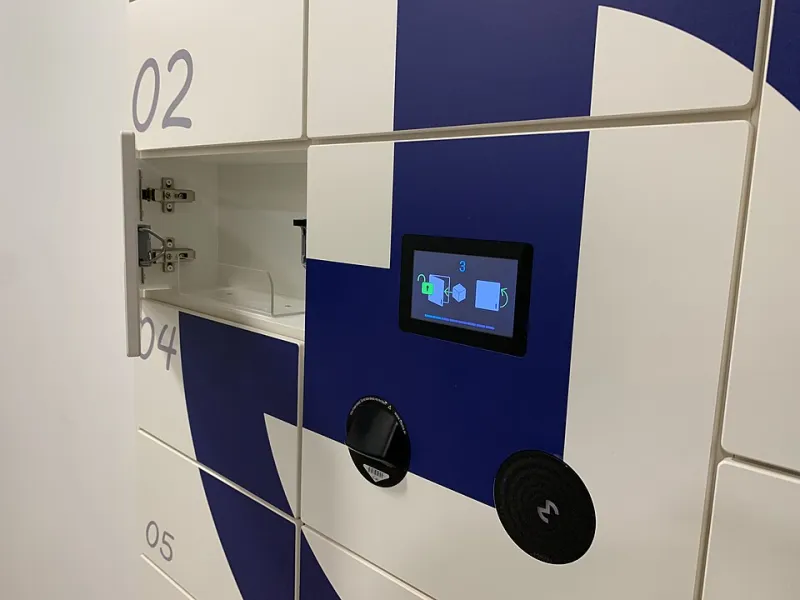
Photo: Vinko999, CC BY-SA 4.0, via Wikimedia Commons
By mid-November 2026, the annual parcel avalanche is in full swing. Royal Mail, Evri, DPD, Amazon and the rest are busier than at any other point in the year, and the note through the letterbox saying “we tried to deliver” is a small, familiar irritation. If you have a garage, it is tempting to think you already own the solution: a big, lockable box attached to your house. Just leave it slightly open, or give the courier a way in, and the parcels look after themselves.
That is the theory. In practice, the garage is a decent parcel drop only if you separate two things that often get muddled: access and security. Get those wrong and you have either a door that is open to everyone or a delivery that never happens.
The appeal of the garage as a parcel drop
A garage has obvious advantages. It is under cover, it is out of sight from the road, and it is usually big enough for the awkward boxes that will not fit through a letterplate. For anyone who works away from home or has a long commute, the idea of a secure indoor drop is appealing.
But a garage door is a big, heavy thing designed to be either shut or open. It is not a letterbox. And most couriers are not insured or instructed to open a customer’s garage door, even if you have left it unlocked for them. That is the first thing to understand before you start drilling holes or buying gadgets.
What couriers will and will not do
Courier apps increasingly let you nominate a “safe place” — a porch, a shed, a neighbour, a specific spot behind the bins. Some will photograph the parcel where they left it. What almost none of them will do is operate your garage door, even if you have fitted a smart opener and sent them a link.
There are reasons for that. Drivers work to tight schedules, they are not trained on your particular door, and their employer’s insurance generally does not cover them entering a customer’s building. A driver who opens the wrong door, damages a seal, or gets trapped by a closing mechanism is a liability claim waiting to happen. So the idea that a courier will happily use a guest pass on your smart opener is, for most UK routes, optimistic.
Some couriers will leave a parcel inside an open garage if you have specified it as a safe place, but that relies on the door already being open. That leads to the next problem.
The cracked-open door: weather, security and wear
Leaving a garage door open by 100–150mm for hours is not a neutral act. It is a gap. Rain blows in. Leaves collect. Mice and cats treat it as an invitation. If the door is a sectional or roller type, the rubber seal is not designed to be compressed unevenly for long periods, and the automation arm or tension springs may not enjoy repeated partial cycles.
Security is the bigger issue. A door that is visibly ajar tells anyone passing that the garage is not secured. Most domestic garage doors are not designed to be locked in a partly open position. The lock, if there is one, engages when the door is fully shut. So a “cracked open” door is often effectively unlocked, even if it looks closed from a distance.
If you would not leave your back door ajar for six hours, the garage door deserves the same suspicion.
Smart openers and guest permissions: what they actually offer
Smart garage door controllers have improved a lot. Brands such as Hörmann, Somfy, ismartgate, Meross and Tailwind offer app control, schedules and, on some models, temporary or one-time access for guests. That is genuinely useful for family members, cleaners or a neighbour who takes in parcels.
But guest access is not a courier solution. A one-time link can be forwarded, screenshotted or shared. A timed window relies on the driver arriving within it, which is not how delivery slots work. And even if the technology works perfectly, the driver still has to be willing to use it. Most are not.
A more realistic use is to give a trusted neighbour or family member temporary access so they can put a parcel inside for you. That is a human arrangement, not a courier one.
The signage question
A small sign saying “Parcels: please leave in the garage” is harmless enough if the garage is already open. A sign that gives instructions for opening the door, or displays a code, is a different matter. Never put an access code on the outside of a garage door. It is the equivalent of leaving a key under the mat, except more visible.
If you use a lockable parcel box outside the garage, a simple sign pointing to it is fine. If you use a key safe, make sure it is a recognised model fitted out of sight, and check what your insurer says about it. A cheap key safe with a code written on the front is not security; it is theatre.
A workable setup that does not compromise the door
If you want the garage to take parcels without leaving the main door open, think in layers.
- A separate parcel box. A lockable outdoor parcel box — sometimes called a parcel drop box — is the least invasive option. It keeps couriers on the outside and your garage door shut. Check the opening size against the sort of parcels you actually receive.
- A side door with a smart lock. If your garage has a pedestrian side door, a smart lock or key safe can give a trusted neighbour access without touching the main door. This is for people you know, not couriers.
- A named safe place. Use the courier app to nominate a specific, sheltered spot. Be honest about whether it is actually secure. “Behind the wheelie bin” is not a safe place if the bin is on the pavement.
- A neighbour arrangement. Old-fashioned, but it works. A neighbour who takes the parcel in is more reliable than a door left ajar.
- Click and collect or a locker. For high-value items, a local locker or collection point removes the problem entirely.
What about fitting a parcel hatch or letterplate to the garage door itself? A letterplate is fine for letters, but parcel-sized hatches are rare, bespoke and can affect the door’s structural warranty. If you are considering one, talk to the door manufacturer first — not a handyman with a jigsaw.
Insurance and warranty caveats
Check your home insurance policy before you start giving access. Many policies require the garage door to be locked when the garage is unattended, and some exclude theft from an outbuilding or garage if it is not secured. If you leave the door open and something goes missing, you may find the claim is refused.
There is also the courier’s liability. Once a parcel is left in your designated safe place, the courier’s responsibility usually ends. If it is stolen from an open garage, that is generally your risk, not theirs. And if you have given someone access via a smart opener, the manufacturer’s warranty may not cover damage caused by misuse or unauthorised entry.
A short checklist before the next delivery
- Decide whether you want courier access or trusted-person access. They are not the same.
- Do not leave the main garage door ajar for hours. Use a parcel box or a neighbour instead.
- If you use a smart opener guest pass, limit it to people you know and revoke it afterwards.
- Keep codes off the door and out of sight.
- Check your insurance policy for garage security conditions.
- For anything valuable, use a locker or collect in person.
The garage can be part of a sensible delivery setup. It just works better as a locked room with a separate parcel box than as a door left open with a hopeful note on it.